For generations, humanity looked up at the night sky and viewed the cosmos as an unchanging, silent canvas of stars. However, we are currently living through a golden era of astrophysics where our understanding of the universe is being dismantled and rebuilt almost weekly. Armed with next-generation infrared space telescopes, highly sensitive neutrino detectors, and robotic rovers traversing alien deserts, astronomers are peering deeper into the dark than ever before.
The sheer velocity of cosmic breakthroughs has left even seasoned scientists breathless. From interstellar interlopers passing through our backyard to gargantuan cosmic structures that challenge the very laws of physics, the amazing space discoveries scientists made recently are forcing us to rewrite the textbooks.
Whether you are a casual stargazer or a dedicated physics enthusiast, these recent cosmic revelations from late 2025 and mid-2026 will completely transform how you view our place in the infinity of space.
1. The Real Interstellar Visitor: Comet 3I/ATLAS
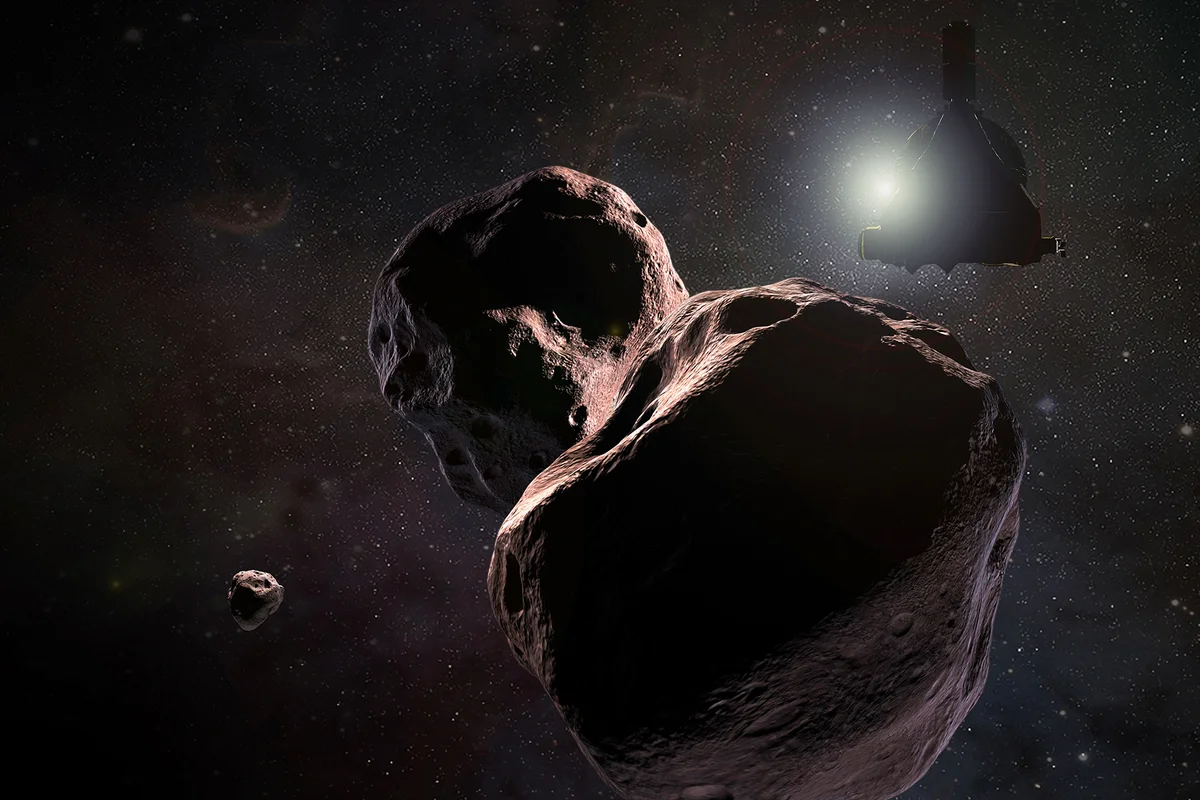
When scientists discovered ‘Oumuamua in 2017 and Comet Borisov in 2019, they realized our solar system is routinely visited by cosmic wanderers born under distant suns. Fast forward to the latter half of 2025, and astronomers captured a rare glimpse of a third interstellar object slicing through our corner of space: Comet 3I/ATLAS.
What makes 3I/ATLAS stand out among the amazing space discoveries scientists made recently is its bizarre physical composition. When analyzed using deep-space spectrographs, the comet revealed a true “anti-tail”—a spike of dust that appeared to point directly toward the Sun rather than away from it.
While initially sparking wild internet rumors of artificial propulsion, international astrophysics teams confirmed that this structural anomaly is purely a geometric optical phenomenon caused by larger dust grains left behind in the comet’s orbital plane. Tracking this primeval block of ice into 2026 has provided unprecedented chemical data regarding the composition of protoplanetary disks in alien star systems.
2. A Paradigm Shift: Dark Energy May Be Evolving
For nearly three decades, the standard model of cosmology operated on a fundamental rule: dark energy—the mysterious force accelerating the expansion of the universe—is a cosmological constant. It was believed to be an unchanging property of space itself, completely uniform throughout time.
That foundational rule was thoroughly shaken when the Dark Energy Spectroscopic Instrument (DESI) collaboration published a comprehensive 3D map of our universe. Spanning over 13 million galaxies and millions of ancient quasars, the data revealed a shocking anomaly: dark energy appears to be weakening over time.
Cosmological Impact: If dark energy is not a constant value but an evolving field that can fade or alter, the ultimate fate of our universe changes entirely. Instead of expanding infinitely into a cold, desolate “Big Freeze,” the cosmic acceleration could slow down, stop, or even reverse billions of years from now. This revelation is widely considered one of the most significant paradigm shifts in physics since the discovery of cosmic acceleration itself.
3. The James Webb Puzzle: Solving the “Little Red Dots”
The James Webb Space Telescope (JWST) has a reputation for finding objects that theoretically shouldn’t exist. Among its most baffling catches were a population of highly compact, intensely glowing crimson objects in the deep universe, colloquially named “Little Red Dots” (LRDs).
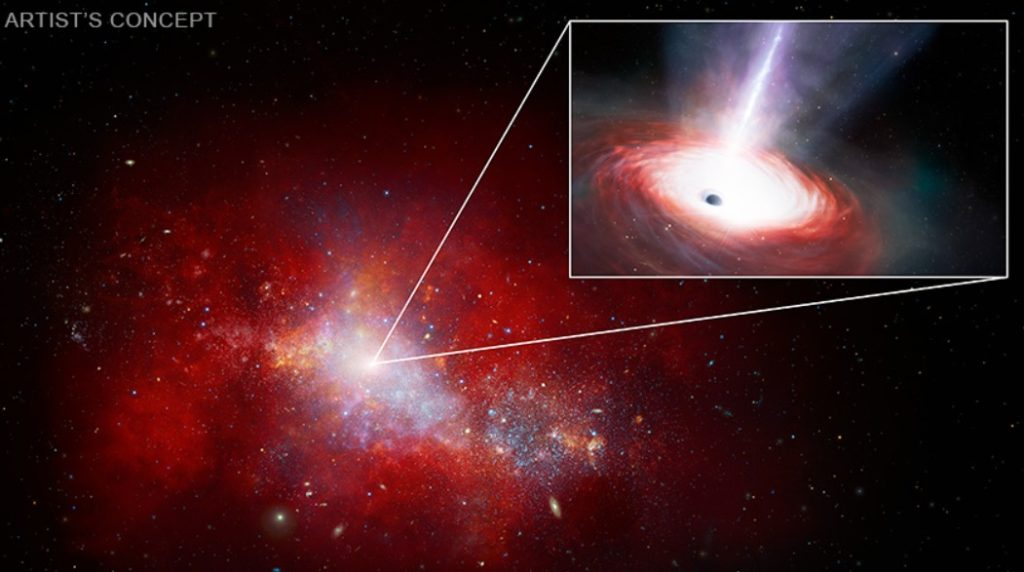
For months, astronomers debated whether these red dots were incredibly dense clusters of early stars or hyperactive supermassive black holes chewing through primordial matter just a few hundred million years after the Big Bang. High-leverage X-ray data integrated in early 2026 has finally pointed to a thrilling third option: Black Hole Stars (BH*).
These hypothetical objects are active, rapidly growing supermassive black holes blanketed by an incredibly dense, hot envelope of gas. The black hole at the center pumps out so much energy that it heats the surrounding stellar nursery until it glows fiercely in the infrared spectrum. This hybrid classification helps solve the cosmic “chicken-and-egg” problem of how supermassive black holes grew so immensely large so early in cosmic history.
4. Microbial “Leopard Spots” on the Martian Surface
While telescopes map the edge of observable time, NASA’s Perseverance rover is executing groundbreaking forensic work on the dusty plains of Mars. At a rock formation nicknamed Cheyava Falls, the rover’s robotic arm scraped away layers of iron-rich rock to reveal something historic: small, chemically distinct “leopard spots.”
On Earth, these specific types of spotting patterns occur in sedimentary rocks when chemical reactions involving organic molecules create localized spots of discoloration. The reactions provide an energy source for microbes.
While astrobiologists are maintaining strict scientific caution and waiting for a sample-return mission to Earth before declaring definitive proof of alien life, the presence of iron phosphate, sulfate, and organic compounds within these Martian spots represents the most compelling circumstantial evidence of ancient microbial habitability ever recorded on another planet.
Mapping the New Cosmos: Breakthrough Summary
To help you visualize how these amazing space discoveries scientists made recently shake up our traditional understanding of astronomy, we can compare legacy scientific assumptions against the verified data of the current year.
Astronomical Theme
Legacy Scientific Assumption
2026 Verified Discovery Reality
Cosmic Implications
Dark Energy Behavior
A strict cosmological constant ($ \Lambda $) that remains perfectly uniform across time.
Fluctuates and shows distinct signs of weakening over billions of years.
Challenges general relativity and alters theories on the universe’s ultimate end.
Early Black Holes
Required billions of years of slow accretion to reach supermassive status.
“Black Hole Stars” formed rapidly via direct gas collapse in the infant universe.
Explains the mysterious presence of gargantuan black holes at cosmic dawn.
Outer Solar System
Uranus and Neptune possess entirely stable, quiet satellite environments.
Discovered massive magnetic distortions and new minor moons orbiting Uranus.
Reveals that the ice giants have far more chaotic and dynamic systems than assumed.
Exoplanet Habitation
Liquid water oceans are entirely unique to the inner habitable zone of solar systems.
Atmosphere modeling of exoplanet K2-18b confirms complex carbon chemistry.
Expands the definition of the “habitable zone” to include deep ocean-covered worlds.
5. Cosmic Collisions: “Dracula’s Chivito” and Planetary Smashups
In May 2026, the Hubble Space Telescope added to the list of amazing space discoveries scientists made recently by capturing a giant, chaotic planet nursery unlike anything seen before. Nicknamed “Dracula’s Chivito,” this enormous, edge-on disk of dust and gas surrounding a newborn star shows a violent, uncoordinated birthing ground for future worlds.
Simultaneously, astronomers tracking a star system 190 light-years away published definitive evidence of a recent planet-on-planet collision. The dramatic infrared glow and shifting dust clouds confirm that two massive rocky worlds slammed into each other at thousands of miles per hour. Watching the literal destruction and reconstruction of planetary systems in real-time provides invaluable data on how our own Earth survived its chaotic infancy.
The Universe Awaits
The universe is clearly not a quiet, static void; it is an active, evolving, and beautifully violent theater of physics. The amazing space discoveries scientists made recently prove that we are merely scratching the surface of cosmic literacy.
As the Nancy Grace Roman Space Telescope prepares for its upcoming launch later this year to conduct even wider, more detailed surveys of dark matter and exoplanets, our window into the unknown will open even wider. Every rogue comet, Martian spot, and anomalous red dot is a reminder that the boundary of human knowledge is constantly expanding. Keep your eyes turned upward—the next great cosmic revelation is already traveling through the dark toward us.