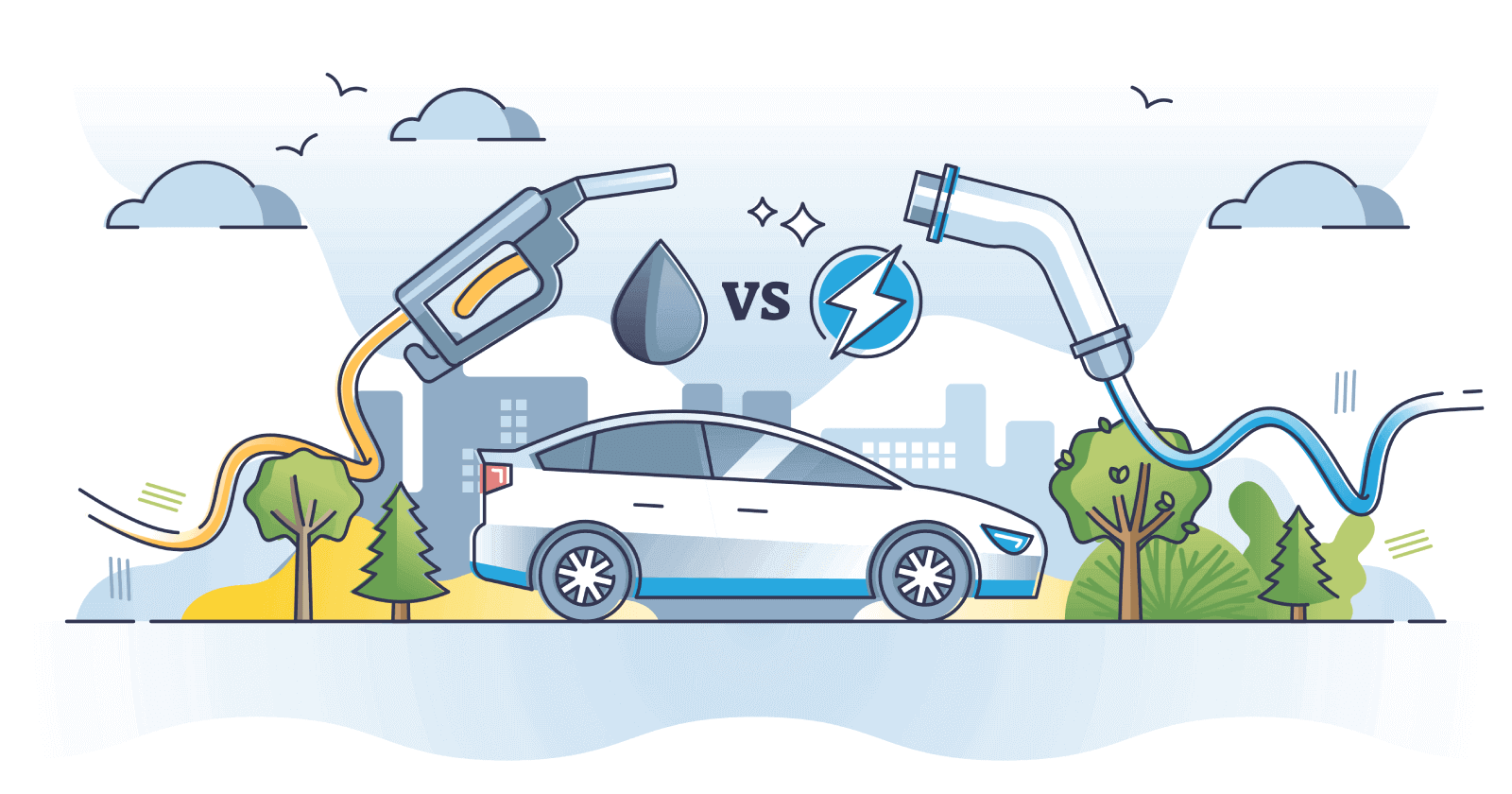
The current era of the automobile industry is undoubtedly one of great changes. For over a hundred years now, the ICE was always the obvious choice for people. However, the arrival of the EV revolution is not something we were only talking about. As we head towards the end of 2026, the influx of Electric Vehicles has become undeniable.
When it comes to choosing a new car in 2026, many consumers have found themselves facing tough choices. The benefits that petrol cars provide, such as convenience and availability of refueling stations, can be outweighed by electric cars’ advantages, such as their efficiency and environmental friendliness. This complete guide will consider all aspects of both types of vehicles in order to figure out which of them is better.
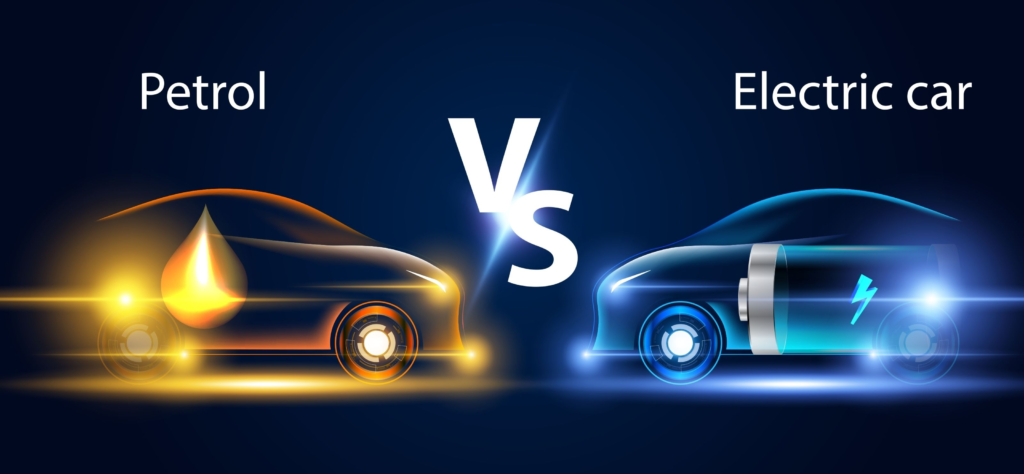
1. The Cost Equation: Initial vs. Running Expenses
However, the most important factor in choosing between petrol and electric cars will always be the price, often called the “sticker price.”
- Petrol Vehicles: The price of a new car is usually low. Even by 2026, there will be very efficient petrol hatchbacks and SUVs for different price ranges.
- Electric Vehicles: Electric cars have a higher initial price because of their expensive lithium-ion batteries. This difference is slowly closing as the costs of batteries decline and government incentives encourage adoption.
Operational Costs
The real value of an electric car can be found in the “price per kilometer” of traveling. The electricity required to charge an electric car will always be much cheaper than buying fuel for gasoline, especially taking into account changes in world oil prices. The difference in cost can reach up to 70%-80%.
2. Performance and Driving Dynamics
They differ in terms of how they deliver power and thus affect the overall driving experience.
- Electric Power: EVs have “instant torque.” As soon as you press down on the throttle, the car accelerates with maximum force. This makes EVs highly enjoyable and agile in congested city traffic.
- Petrol Power: ICEs have to “warm up” to attain their maximum power band. Though modern turbos are highly responsive, they cannot compare with the silent linear acceleration provided by electric motors.
3. Infrastructure and Convenience
This is the domain where, as far as long-haul travelers are concerned, petrol is often preferred over EVs.
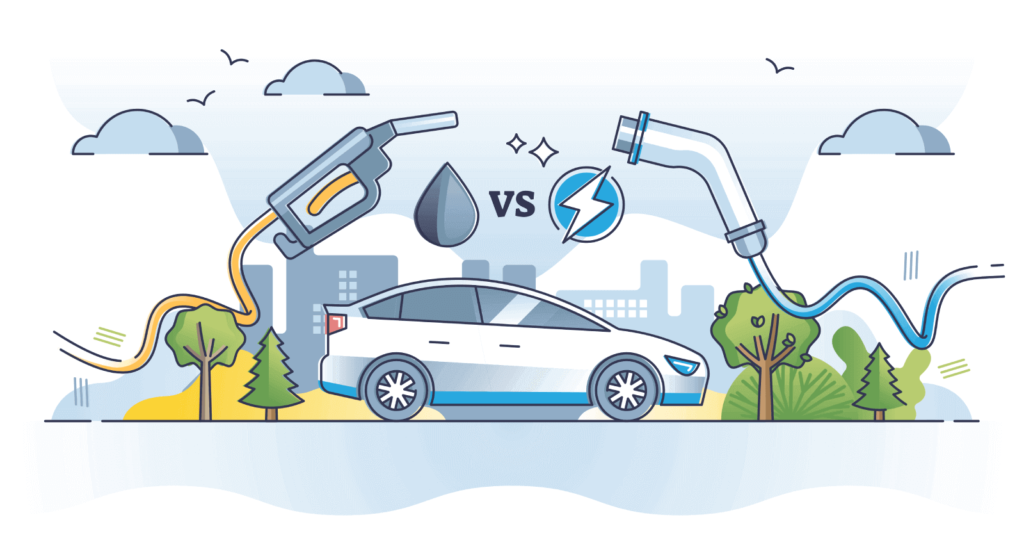
- Refueling: Gas stations are abundant, making it easy to fuel your vehicle quickly within five minutes.
- Charging: Although we have witnessed a tremendous increase in the availability of fast charging stations across the main Indian highways in 2026, it still takes around half an hour to fully charge your battery.
4. Maintenance and Longevity
An internal combustion engine comprises hundreds of moving parts, including pistons, valves, fuel pumps, and exhaust systems, that require constant lubrication and maintenance.
- EV Simplicity: An electric motor is incredibly efficient due to the reduced number of moving parts, making it unnecessary to change oil, spark plugs, and timing belts.
- Battery Concerns: Battery deterioration is the main issue facing EV users. Most companies provide an 8-year warranty for EV batteries in 2026. However, the long-term value of an EV that is ten years old remains uncertain as compared to the resale value of a petrol car.
5. Comparative Performance Metrics
To give you a clearer picture, here is how the two stack up across essential ownership criteria.
| Ownership Factor | Petrol Vehicles (ICE) | Electric Vehicles (EV) | Winner in 2026 |
|---|---|---|---|
| Upfront Price | Lower (Affordable) | Higher (Premium) | Petrol |
| Fuel/Power Cost | High & Volatile | Low & Stable | Electric |
| Maintenance | Frequent & Costly | Minimal & Cheap | Electric |
| Resale Value | Established/High | Developing/Moderate | Petrol |
| Environmental Impact | High Emissions | Zero Tailpipe Emissions | Electric |
| Refuel/Charge Time | 5 Minutes | 1 – 8 Hours | Petrol |
6. Environmental and Social Impact
The year 2026 is marked by efforts to promote green mobility. Conventional automobiles play a significant role in contributing to urban smog and global warming. Even though EVs have a substantial carbon footprint during battery production, they remain cleaner through their lifespan since power grids will transition to solar and wind energy.
FAQs: Petrol vs Electric
Are EVs really cheaper in the long run?
Yes. If your daily commute is over 40–50 km, the savings on fuel and maintenance will usually offset the higher initial price of an EV within 3 to 4 years.
Is range anxiety still a thing in 2026?
It is decreasing. Most budget EVs now offer a “real-world” range of 300–400 km on a single charge. With the proliferation of fast chargers at malls, offices, and highways, range anxiety is becoming less of a concern for city users.
Can I use my banking apps on the go to pay for charging?
Absolutely. All EV charging stations in India are integrated with UPI and digital banking. You can use any smartphone—Android or iPhone—to pay via apps like Google Pay or PhonePe securely. +1
Which is better for resale value?
Currently, petrol cars hold their value better because the used car market for EVs is still maturing. However, as EV adoption grows, this gap is expected to close.
The Verdict: Which Is Better for You?
The choice between petrol vs electric depends entirely on your specific use case:
- Choose Petrol if: You frequently go on long, unplanned road trips, live in an apartment without dedicated charging infrastructure, or have a limited upfront budget.
- Choose Electric if: You have a fixed daily commute (30–80 km), can install a charger at your home or office, and want to enjoy a silent, high-tech, and environmentally responsible driving experience.
In 2026, there is no “wrong” answer—only the answer that fits your garage and your goals