Living in today’s hyper-connected world of the “software-defined,” where we receive notifications about the happenings across the globe all the time, our biological make-up cannot cope with all the challenges. As a result, many people have experienced a rapid heartbeat, breathing difficulties, and fear of what might come next. But how can we understand this phenomenon? Anxiety is not just another “glitch” in your system; it is an ancient, survival-based “vibe” that protects you from potential threats. Although in today’s conditions, your brain tends to mistake a work-related deadline or any kind of social media activity for a saber-toothed tiger. Understanding this process will definitely help you overcome anxiety.
The Biological Blueprint: Why We Feel Anxious
To answer the question “What is anxiety?” one needs to study the “software-defined” structure of our brain. The key element in understanding the concept is the amygdala, the small almond-shaped area that serves as your smoke detector.
As soon as your amygdala senses a danger, the fight-or-flight response kicks in. It releases cortisol and adrenaline into your system. In today’s world, we refer to it as a “high-alert vibe.”
- Physical Response: Your heart rate increases to pump blood to your muscles.
- Respiratory Shift: Your breathing becomes rapid to increase oxygen intake.
- Digestive Pause: Your body shuts down non-essential functions (like digestion), which is why anxiety often causes a “knot” in the stomach.
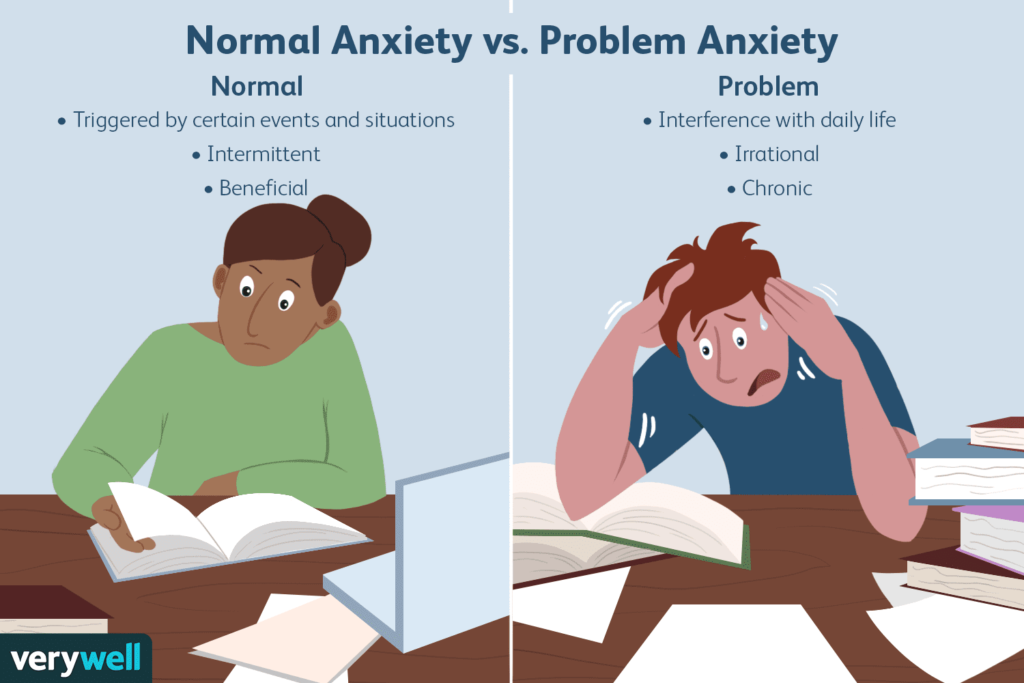
The Difference Between Stress and Anxiety
Many people use these terms interchangeably, but they are biologically distinct.
- Stress: This is a response to an external trigger (a busy day at work, an exam). It usually dissipates once the situation is resolved.
- Anxiety: This is an internal response. It is characterized by persistent, excessive worries that don’t go away even when the external stressor is gone.
Asking what anxiety is helps us identify that the “software-defined” alarm is ringing even when there is no smoke. It is an over-anticipation of future threats that may never happen.
Common Types of Anxiety in 2026
Anxiety manifests differently for everyone. As we navigate the mid-2020s, psychologists have identified several key ways this “vibe” presents itself:
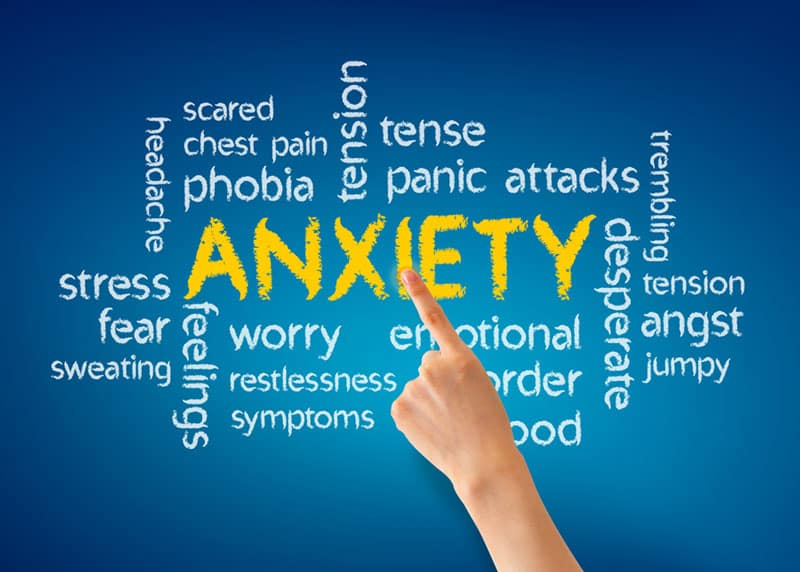
1. Generalized Anxiety Disorder (GAD)
It is defined by chronic and excessive worries about one’s regular existence. Those suffering from GAD devote several hours to wondering what anxiety is affecting their productivity, stressing themselves over health, financial concerns, or family without any particular reason.
2. Social Anxiety Disorder
As already mentioned above, it goes beyond “timidity.” Instead, it means having an unreasonable phobia of judgment or rejection in social scenarios. In today’s world, it extends to include “social media anxiety”—being upset due to lack of “likes” on the Internet. The problem seems to be triggered by a “software-defined” response.
3. Panic Disorder
Those experiences include unexpected and rapid episodes of extreme terror with physical symptoms such as chest pain or palpitations. They appear to be like a real-time “system crash.”
The “Software-Defined” Rewiring: Can You Fix Anxiety?
In 2026, there is some good news regarding neuroplasticity. In fact, our brains can be “reprogrammed” to respond differently under stressful circumstances. Once we understand what anxiety is down to the cell, it becomes possible to utilize certain techniques to reduce alarm signals.
- Box Breathing: A simple, 4-second “software-defined” breathing pattern that signals your nervous system to move from “sympathetic” (stress) to “parasympathetic” (rest).
- Cognitive Reframing: Learning to challenge the “vibe” of a thought. Instead of “I am going to fail,” you train your brain cells to say, “I am feeling nervous because this matters to me.”
- Digital Detox: In 2026, a significant portion of our anxiety is “data-driven.” Setting “software-defined” boundaries with your devices can lower your baseline cortisol levels significantly.
The Role of Lifestyle: Gut Health and Anxiety
Emerging research in 2025 and 2026 has highlighted the “gut-brain axis.” Your gut produces about 95% of your body’s serotonin—the hormone that stabilizes your mood. When people ask what anxiety is, they are often surprised to learn that their diet plays a massive role. A “vibe” of high-sugar and ultra-processed foods can cause inflammation in the gut, which sends “software-defined” distress signals directly to the brain, heightening anxiety.
When to Seek Professional Help
Recent studies in 2025 and 2026 have focused on the “Gut-Brain Axis.” As a matter of fact, the gastrointestinal tract generates around 95% of serotonin, the hormone responsible for stabilizing the mood. Those who inquire about what anxiety is are typically taken aback to find out that it all starts with the diet. Having a “vibe” of highly sugary and ultraprocessed products will lead to inflammation of the gut. This will produce “Software-Defined” alarms.
Living with an Active Mind
So, what is anxiety? It is a sign that your brain is trying very hard to keep you safe. It is an ancient survival mechanism living in a modern, high-speed world. By acknowledging the “vibe,” understanding the biology, and using “software-defined” tools for regulation, you can move from being controlled by your anxiety to simply co-existing with it.
You are not your anxiety. You are the observer of the alarm, and you have the power to choose how you respond when it rings.
Frequently Asked Questions (FAQs):
What is anxiety vs. a panic attack?
Anxiety is typically a long-term “vibe” of worry that builds up over time. A panic attack is a sudden, intense “software-defined” spike of physical symptoms that usually peaks within 10 minutes and feels like a medical emergency.
Can anxiety be cured permanently?
While you may always have the biological capacity for the “fight-or-flight” response, the disorder of anxiety can be managed to the point where it no longer interferes with your life. Through “software-defined” habits and therapy, you can lower your brain’s sensitivity to triggers.
What is anxiety’s most common physical symptom?
The most common physical symptom of anxiety is a persistent “software-defined” tightness in the chest or an increased heart rate, often accompanied by muscle tension in the jaw or shoulders.