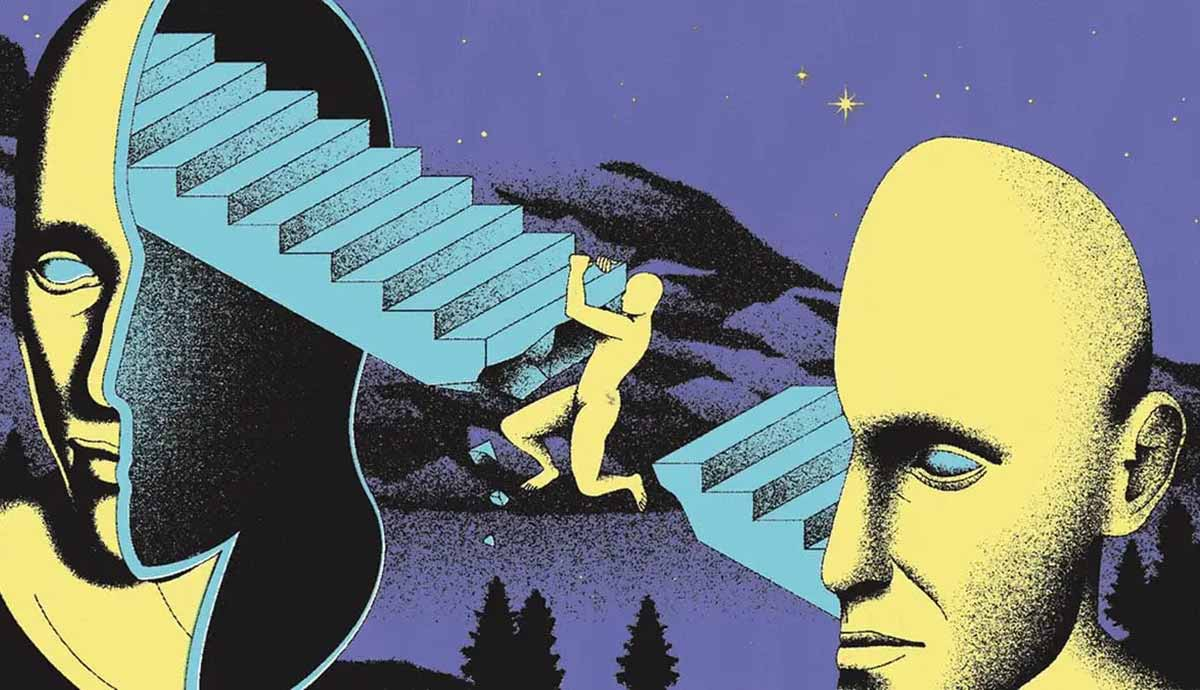
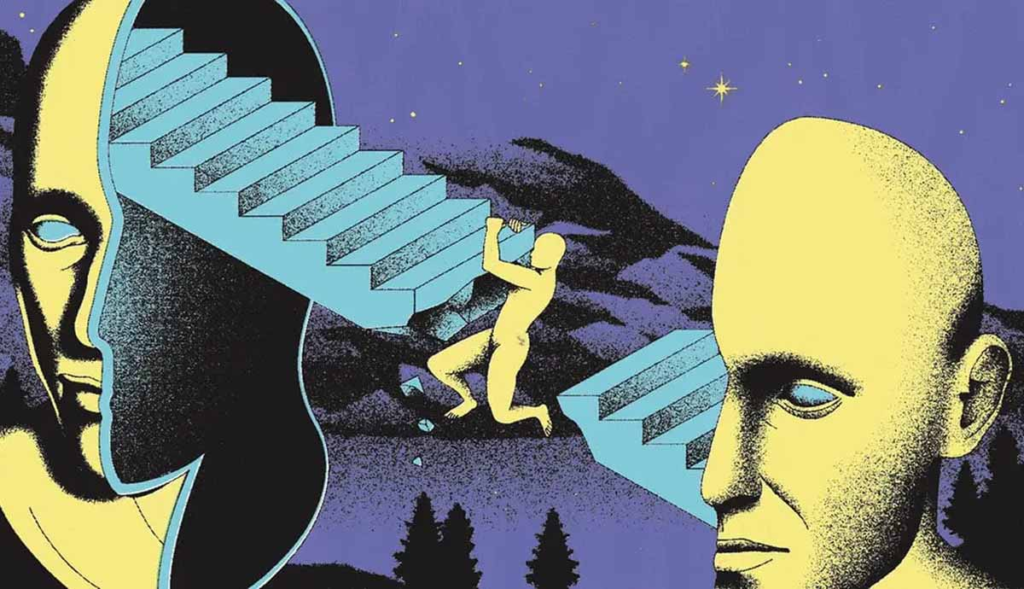
In today’s hectic and “software-defined” world of 2026, where everything seems to happen faster than we can grasp it, people often find themselves scrolling down on their social media newsfeeds, asking, “Is this it? What does it all mean? This is where the main philosophical movement in history comes into play. If you’ve ever wondered whether life came with an instruction manual, you’ve already got a grasp on existentialism.
Existentialism may sound like a bleak or dreary philosophy, but it is, in fact, quite empowering. According to existentialists, you are not a mere cogwheel in the grand design of the universe, but the architect of your soul. In this era of AI and global transformations, the central tenets of existentialism remain highly relevant and insightful.
The Core Concept: Existence Precedes Essence
So what is existentialism? The key to answering this question is in Jean-Paul Sartre’s well-known slogan: “Existence precedes essence.”
Most things in the world are built with a purpose in mind. For example, a papercutter is created to cut paper; thus, its essence (or purpose) precedes its existence. The case is different when talking about humans, who are born first and are, therefore, not endowed with any predefined essence (or purpose). Instead, we are all blank slates, and it is up to us to craft our essences.
The Big Three: Freedom, Choice, and Responsibility
When asking the question about what is existentialism, one seeks ways to cope with the enormous freedom granted by contemporary life conditions. According to the existentialists, we are condemned to be free, and this freedom is not our right. Rather, this freedom is an obligation which we have.
- Freedom: There is no “fate” or “destiny” pulling the strings. You have the total freedom to choose who you want to be in 2026.
- Choice: Your identity is the sum total of your choices. Every “Software-Defined” decision you make—from your career to your relationships—defines your reality.
- Responsibility: Because you are free to choose, you are also responsible for the consequences. This is what leads to “existential angst” or “dread”—the realization that you alone are the captain of your ship.
Facticity and Transcendence: The Human Balance
One should understand that “Facticity” and “Transcendence” are crucial components of the philosophy of existentialism and its understanding.
- Facticity: These are the things you cannot change—where you were born, your DNA, your past.
- Transcendence: This is your ability to move beyond your circumstances.
While you can be born with certain limitations (facticity), your “Software-Defined” destiny will depend on what you do with this facticity. Being an existentialist means making decisions, no matter where you are from.
Authenticity vs. “Bad Faith”
The issue of Bad Faith is especially relevant at the moment. In 2026, the algorithms of social media try to direct our thinking and actions, and according to Sartre, being in Bad Faith means denying that freedom and saying: “I have no choice,” or “That’s just who I am.”
The concept of Bad Faith is essential for comprehending what is existentialism and being authentic. Authenticity means owning yourself and all your choices. When following social conventions, one lives in bad faith, and it is against the spirit of existentialism.
The Absurd: Finding Joy in the Meaningless
Confusion between existentialism and nihilism is common. Nihilism states “nothing matters; therefore, let’s not make any effort,” while existentialism claims “nothing matters in the universe in its true sense; hence, it’s me who decides what matters!”
Albert Camus came up with the concept of “The Absurd.” It is a contradiction in the human race’s desire for meaning and the silent, meaningless universe. According to him, accept absurdity, and learn how to live in the face of absurdity. Just like Sisyphus pushing his boulder up a mountain, there is beauty in struggling. In 2026, making meaning out of a hobby, a task, or a relationship is revolutionary against the absurd.
Why Existentialism Matters in 2026
We are living in an era where algorithms have predicted our next step. With an understanding of what is existentialism, we have the “software-defined” methods to take back our humanity. Existentialism is a reminder that:
- Mental Health: You have the power to reframe your narrative.
- Career: You aren’t defined by your job title, but by the integrity you bring to it.
- Legacy: You create your legacy through small, daily actions of kindness and creativity.
You are the Author
Therefore, what is existentialism? It is a philosophy of self-realization. It is an acknowledgment of the fact that the universe doesn’t have anything to offer you, but it gives you the opportunity to make something out of nothing. Moving ahead in 2026, you need to realize that you are the creator of your vibe, not a product of your surroundings.
The boulder might be heavy, and the hill might be steep, but the choice to keep climbing belongs entirely to you.
Frequently Asked Questions (FAQs):
Is existentialism a dark or depressing philosophy?
No. While it acknowledges the “angst” of responsibility, the ultimate answer to what is existentialism is empowerment. It tells you that you are free to change your life at any moment, which is a very hopeful message.
What is the difference between Existentialism and Nihilism?
Nihilists believe that life is meaningless and that’s the end of it. Existentialists agree that there is no inherent meaning, but they believe we have the duty to create our own meaning through our choices.
Who are the most famous existentialist philosophers?
The most famous figures include Jean-Paul Sartre, who focused on freedom; Albert Camus, who explored the absurd; and Simone de Beauvoir, who applied existentialist “Software-Defined” principles to feminism and social structures.